Forskningsenheden for Muskuloskeletal Funktion og Fysioterapi, Institut for Idræt og Biomekanik, Syddansk Universitet
Korresponderende forfatter: Julie Rønne Pedersen, E-mail: jkrpedersen@health.sdu.dk

Resumé
Systematiske oversigtsartikler har vist, at brugen af smertestillende medicin er udbredt blandt eliteatleter. En meta-analyse fandt eksempelvis, at 92% af unge atleter bruger smertestillende medicin i løbet af en sæson. Oversigtsartiklerne var udelukkende baseret på tværsnitsstudier og konkluderede, at der mangler prospektivt indsamlede data. Derfor gennemførte vi et prospektivt kohortestudie, der undersøgte forbrugsmønstre blandt 735 unge eliteatleter og 545 gymnasieelever. Vores resultater viste, at brugen af smertestillende medicin er udbredt blandt både atleter og gymnasieelever, med ugentlige prævalensestimater på 15-32% blandt atleter og 15-52% blandt gymnasieelever. Overordnet havde atleterne 22% lavere odds for forbrug sammenlignet med gymnasieeleverne. Der var dog ingen forskel, når vi stratificerede for køn. Resultaterne viste også, at flere atleter bruger smertestillende medicin til at behandle sportsrelaterede smerter og skader samt til at forebygge smerter sammenlignet med gymnasieeleverne. Yderligere forskning er nødvendig for at forstå påvirkende faktorer og identificere forskellige forbrugsmønstre.
Indledning
Eliteatleters brug af smertestillende medicin har været omdiskuteret i flere år (1). Tidligere topatleter beretter jævnligt i pressen om et stort og langvarigt forbrug af smertestillende medicin, både under og efter deres aktive karriere (2). Samtidig arbejder forskere på at kortlægge forbrugets omfang i forskellige sportsgrene og diskuterer, hvordan smertestillende medicin kan anvendes i elitesport uden at kompromittere atleternes kort- og langsigtede helbred (3-5).
I 2018 publicerede en arbejdsgruppe under den Internationale Olympiske Komité (IOC) en systematisk oversigtsartikel, som konkluderede, at brugen af smertestillende medicin er udbredt blandt eliteatleter (4). De inkluderede studier viste blandt andet, at over 50 % af atleterne anvender smertestillende medicin under internationale sportsbegivenheder, og at op til 93 % af professionelle fodboldspillere har anvendt smertestillende medicin inden for de seneste 12 måneder (4). Forfatterne påpegede dog flere begrænsninger ved den nuværende evidens, herunder at der udelukkende foreligger tværsnitsstudier, at de fleste studier har fokuseret på forbrug af non-steroide antiinflammatoriske præparater (NSAIDs), samt at meget få studier har undersøgt forbruget blandt unge eliteatleter (5).
Med udgangspunkt i en systematisk oversigtsartikel og et nyligt publiceret prospektivt kohortestudie vil jeg præsentere de nyeste data fra min ph.d. om unge eliteatleters forbrug af smertestillende medicin og diskutere, hvad vi stadig mangler svar på.
Hvad viser den nuværende evidens om unge atleters forbrug af smertestillende medicin?
I en systematisk oversigtsartikel med meta-analyse fra 2022 undersøgte vi prævalens, frekvens, årsager til forbrug og bivirkninger ved brug af smertestillende medicin blandt unge atleter (15-24 år) (6). Vi inkluderede 49 studier med i alt 44.381 atleter fra forskellige sportsgrene og konkurrenceniveauer, hvoraf 18 inkluderede eliteatleter. Vi fandt en udbredt brug af NSAIDs med en punktprævalens på 49% (95% CI: 23-73%) og en sæsonprævalens på 92% (95% CI: 88-95%). Punktprævalensen for de øvrige typer af smertestillende medicin (paracetamol, acetylsalicylsyre, opioider, uspecificerede præparater og blandede præparater) varierede fra 3% til 50%. Den laveste prævalens var for brug af injektioner inden for de seneste 12 måneder (2% [95% CI: 1-3%]). Subgruppeanalyser viste ingen forskel i prævalensestimater mellem eliteatleter og ikke-eliteatleter.
Baseret på de 14 studier, der rapporterede frekvensdata, fandt vi, at 7-50% af unge atleter bruger smertestillende medicin ugentligt, mens 6-35% har et månedligt forbrug. De mest almindelige årsager til brug af smertestillende medicin var behandling af sportsrelaterede smerter, muskelømhed og sygdom, forebyggelse af smerter inden sportsdeltagelse samt præstationsforbedring. På trods af det tilsyneladende omfattende forbrug rapporterede kun fire studier data om forekomsten af bivirkninger forbundet med brug af smertestillende medicin. På tværs af forskellige præparater rapporterede 3-19% af atleterne at have oplevet bivirkninger såsom mave-tarm-problemer, træthed, svimmelhed, nedsat muskelkraft, forværring af astmasymptomer, kvalme, opkast, hovedpine og bronkospasme. I overensstemmelse med IOC’s konklusion fandt vi også, at den eksisterende litteratur om brug af smertestillende medicin blandt unge eliteatleter er begrænset til tværsnitsstudier, som hovedsageligt kortlægger forbruget af NSAIDs. Desuden havde ingen studier sammenlignet forbrugsmønstre af smertestillende medicin blandt atleter og en referencepopulation.
De første prospektivt indsamlede data
I et nyligt publiceret prospektivt kohortestudie undersøgte vi prævalensen og frekvensen af smertestillende medicin over 36 uger blandt unge eliteatleter sammenlignet med en gruppe alderssvarende gymnasieelever (7). Derudover identificerede vi årsagerne til forbruget samt de anvendte præparater. Vi inkluderede 735 unge eliteatleter og 545 gymnasieelever i alderen 15-20 år fra 24 gymnasier over hele landet. Elite var defineret som optagelse i et dual-career- eller elitesportsprogram. Hver søndag i 36 uger besvarede deltagerne et standardiseret spørgeskema om deres forbrug af smertestillende medicin inden for de seneste syv dage. Det første spørgsmål kortlagde, hvor mange dage deltagerne havde brugt smertestillende medicin. Ved 0 dages forbrug blev spørgeskemaet afsluttet. Ved 1-7 dages forbrug modtog deltagerne to opfølgende spørgsmål om årsagerne til forbruget samt de anvendte præparater. I alt gennemførte 94% af atleterne og 93% af gymnasieeleverne observationsperioden, og den gennemsnitlige ugentlige svarrate var 88% for atleterne og 85% for gymnasieeleverne. Vi fandt, at 1 ud af 5 atleter bruger smertestillende medicin i en vilkårlig uge (20% gennemsnitlig ugentlig prævalens), mens dette var 1 ud af 4 gymnasieelever (23%). I begge grupper var prævalensen højere blandt piger end drenge. På ethvert givet tidspunkt havde atleterne lavere odds for brug af smertestillende medicin sammenlignet med gymnasieeleverne (OR 0.78 [95% CI: 0.64-0.95]), men forbrugsraten (antal dage per uge) var ens mellem grupperne (IRR 1.04 [95% CI: 0.99-1.11]). Da vi stratificerede analyserne efter køn, var der ingen forskel i odds for forbrug mellem grupperne, hvilket hovedsageligt kan forklares af den forskellige kønsfordeling mellem grupperne (44% piger blandt atleter, 59% piger blandt studerende). Sammenlignet med gymnasieelever brugte flere atleter smertestillende medicin til at behandle smerter før sportsdeltagelse (39% vs. 13%), efter sportsdeltagelse (42% vs. 21%) og til at forebygge smerter i forbindelse med sportsdeltagelse (22% vs. 7%). Til gengæld var der færre atleter, der brugte smertestillende medicin til at behandle sygdom (44% vs. 52%), menstruationssmerter (21% vs. 33%) og andre ikke-sportsrelaterede smerter (53% vs. 65%). For både atleter og gymnasieelever var den hyppigste årsag til forbruget dog at behandle smerter, der ikke var relateret til sport. Der var også forskelle i de anvendte præparater mellem grupperne; flere atleter brugte smertestillende gels, såsom Voltaren-gel, sammenlignet med gymnasieelever (28% vs. 13%). Til gengæld var der færre atleter, der brugte paracetamol (74% vs. 80%) og acetylsalicylsyre (11% vs. 17%). Paracetamol var den hyppigst anvendte præparattype i begge grupper.
Hvad mangler vi stadig svar på?
Selvom vi nu har fået en bedre forståelse af unge eliteatleters forbrug af smertestillende medicin, er der stadig vigtige spørgsmål, som vi mangler svar på. I vores kohortestudie præsenterede vi de overordnede tendenser i vores data og sammenlignede forbrugsmønstre på gruppeniveau. En begrænsning ved denne tilgang er dog, at det ikke er muligt at identificere og fortolke særskilte forbrugsmønstre. Baseret på resultaterne fra vores systematiske oversigtsartikel ved vi, at der findes store variationer i, hvor ofte og hvor meget smertestillende medicin unge atleter benytter. Derfor er vi ved at forberede en artikel, hvor vi identificerer subgrupper af atleter med forskellige forbrugsmønstre. De foreløbige resultater viser, at knap halvdelen af atleterne har et lavt eller intet forbrug af smertestillende medicin, mens en meget lille gruppe (2.5%) benytter smertestillende medicin stort set hver uge. Desuden mangler der fortsat kvalitative studier, der belyser de underliggende kontekster og årsager til eliteatleters brug af smertestillende medicin. Vi har gennemført ni fokusgruppeinterviews med 32 atleter fra kohortestudiet og fundet, at adskillige sociokulturelle faktorer og mekanismer påvirker unge eliteatleters brug af smertestillende medicin. Disse inkluderer blandt andet pres fra trænere, forældre og holdkammerater til at deltage i sport på trods af skader, sygdom eller smerter, ansvarsfølelse over for holdet samt udfordringer med at balancere skole og sport (artikel i reviewproces). Med en bedre forståelse af omfanget af uhensigtsmæssige forbrugsmønstre samt hvilke faktorer der hæmmer og fremmer brugen af smertestillende medicin, kan vi vurdere, om et interventionsstudie er nødvendigt, og hvilke atleter indsatsen skal målrettes.
Hvad er det nye?
Internationale data viser, at brug af smertestillende medicin er udbredt blandt unge atleter på tværs af præstationsniveauer. Blandt andet viste vores systematiske review og meta-analyse fra 2022, at 92% af unge atleter bruger NSAID i løbet af en sæson, og at op til 50% bruger smertestillende medicin ugentligt. Den identificerede litteratur var dog begrænset til tværsnitsstudier, der primært fokuserede på NSAID eller uspecificerede smertestillende præparater. Ydermere manglede der studier, som undersøgte og sammenlignede forbrugsmønstre af smertestillende medicin mellem atleter og en referencegruppe af ikke-atleter.
Dette førte os til at igangsætte et større kohortestudie, hvor vi undersøgte forbrug af smertestillende medicin over 36 uger blandt 735 danske unge eliteatleter og 545 alderssvarende gymnasieelever. Vi fandt, at 20% af unge eliteatleter og 23% af gymnasieelever brugte smertestillende medicin i en given uge. Blandt dem, der brugte smertestillende medicin, var gennemsnittet 2.5 dages forbrug om ugen. Når vi stratificerede for køn, var der ingen forskel i odds eller rate af forbrug mellem atleter og studerende. I begge grupper var det hyppigst anvendte præparat paracetamol. Atleterne rapporterede i højere grad at bruge smertestillende medicin i forbindelse med sportsdeltagelse sammenlignet med studerende.
Et centralt fokus i vores undersøgelse var at identificere de sociokulturelle faktorer og mekanismer, der påvirker unge eliteatleters forbrug af smertestillende medicin. Vi gennemførte ni fokusgruppeinterviews, hvor vi blandt andet fandt, at pres fra trænere, forældre og holdkammerater til at deltage i sport på trods af skader, sygdom eller smerter, ansvarsfølelse over for holdet samt udfordringer med at balancere skole og sport kan bidrage til øget brug af smertestillende medicin.
Vigtigste punkter til den kliniske praksis
- Brug af smertestillende medicin er udbredt blandt unge eliteatleter, men sammenligneligt med jævnaldrende af samme køn.
- Den hyppigste enkeltstående årsag til brug af smertestillende medicin er behandling af smerter, der ikke er relateret til sport, men atleter anvender det også ofte til behandling af skader og smerter i forbindelse med sportsdeltagelse.
- Der er et relativt lavt forbrug af smertestillende medicin med højere risikoprofil, såsom opioider.
- Med kendskab til atletens brug af smertestillende medicin kan sundhedsprofessionelle udvikle mere omfattende og individualiserede rehabiliterings- eller smertehåndteringsforløb.
- Sundhedsprofessionelle bør anerkende og adressere de sociokulturelle faktorer, der påvirker brugen af smertestillende medicin blandt unge eliteatleter.
Referencer
1. Vernec A, Pipe A, Slack A. A painful dilemma? Analgesic use in sport and the role of anti-doping. Br J Sports Med. 2017;51(17):1243-4.
2. DR Sporten. De jernhårde ladies vandt alt: ‘Men jeg ærgrer mig over, at vi var prøvekaniner’. Tiltængelig fra: https://wwwdrdk/sporten/webfeature/annedorthetanderup.
3. Hainline B, Derman W, Vernec A, Budgett R, Deie M, Dvók J, et al. International Olympic Committee consensus statement on pain management in elite athletes. Br J Sports Med. 2017;51(17):1253-8.
4. Harle CA, Danielson EC, Derman W, Stuart M, Dvorak J, Smith L, et al. Analgesic Management of Pain in Elite Athletes: A Systematic Review. Clin J Sports Med. 2018;28(5):417-26.
5. Zideman DA, Derman W, Hainline B, Moseley GL, Orchard J, Pluim BM, et al. Management of Pain in Elite Athletes: Identified Gaps in Knowledge and Future Research Directions. Clin J Sport Med. 2018;28(5):485-9.
6. Pedersen JR, Andreucci A, Thorlund JB, Koes B, Møller M, Storm LK, et al. Prevalence, frequency, adverse events, and reasons for analgesic use in youth athletes: A systematic review and meta-analysis of 44,381 athletes. J Sci Med Sport. 2022;25(19):810-819
7. Pedersen J, Møller M, Storm L, Koes B, Mohammednejad A, Thorlund J. Popping pills in youth elite sports – fact or fiction? A 36-week prospective cohort study of analgesic use in 1195 youth elite athletes and student controls. J Orthop Sports Phys Ther. 2024;54(8):1-29.
Lyng KD1, Dalsgaard SH2, Johansen SK1, Rathleff MS134, Rossing NN2,
1. Center for General Practice at Aalborg University, 2. Sport Sciences, Department of Health Science and Technology, Aalborg University, 3. Department of Health Science and Technology, 4.Faculty of Medicine, Aalborg UniversityDepartment of Physiotherapy and Occupational Therapy, Aalborg University Hospital.
Contact
Kristian Damgaard Lyng
Affiliation address: Fyrkildevej 7, 9220 Aalborg Øst
Telephone: +45 30669439
E-mail: klyng@dcm.aau.dk
Introtext
Career-ending sport injury (CESI) forcing an unexpected transition out of sport, can have severe consequences for adolescents’ lives. Adolescence is a crucial phase where the present and future identity is shaped by the environment and experiences. In this paper, we will introduce the reader to a former football player who had a career-ending hip injury at an early age and how the unwanted transition developed into anxiety, depression, and a feeling of loss of identity. Based on sports psychology research, we will present some practical considerations to manage the psychosocial difficulties associated with early retirement caused by CESI.
Introduction
Physical activity and sports participation have been linked to increased wellbeing and health (1,2), better academic achievements (3) and occupational status in later life (4). However, physical activity and competitive sports also increase the risk of injuries and pain, which can lead to a premature end of a sports career for athletes. The transition out of a sports career is a significant process for an athlete, and involuntary events like sports injuries negatively impact this process (5). CESI does not only affect physical health, but it also has negative psychosocial impacts, which can lead to loss of identity, loneliness, depression, and anxiety (5). Therefore, athletes who experience CESI often need social and emotional support in addition to the clinical support for their injury (5). As healthcare practitioners, we often manage injuries in confidential one-to-one sessions using a holistic health perspective (6). In this short paper we aim to bridge the gap between sports psychology and rehabilitation. This will be done in order to provide practical psychosocial guidance for practitioners who works with adolescents who are, or have been, forced to stop playing their sport because of a CESI.
What is an “identity”?
Several attempts have been made in order to define the concept of identity. In this paper our understanding of identity was inspired by Bruner and colleagues’ work on how youth sports constitutes arenas for social-identity development (7) and defined as; That part of an individual’s self-concept which derives from his/her knowledge of his/her membership of a social group (or groups) together with the value and emotional significance attached to that membership. It is essential to point out that dealing with CESI in adolescents is a team effort and might require support from multiple professions including physiotherapists, medical doctors, psychologists and other stakeholders such as family and friends. In such cross-disciplinary teams, it is important that each profession is aware of their capabilities, limitations and understand the capabilities of the other team members. Such knowledge can aid choosing the right help, at the right time. Importantly, we have to very sensitively address every transition from participating player to injured player because it can be a very stressful, likely, unprepared process that is complex and multidimensional (8). The multi-dimensionality and complexity of CESI is not adequately explained by current psychosocial literature for rehabilitation after sports injury (9). Nevertheless, the existing literature highlights three primary resources, coping skills, social support, and pre-retirement planning that each influence the athlete’s thoughts, emotions, and behaviours. Throughout this paper, we will elaborate on these resources in the context of a semi-structured interview with Maria (pseudonym) and the experiences and challenges she faced during her time after she ended her active sports career (Box 1).
Box 1: Case
Maria, 19 years old. She used to play football at an elite level in Denmark until she turned 18. After suffering a hip-injury, she had several unsuccessful experiences with physiotherapy and medications. After a 3-month period away from football, with no improvement in pain, she decided to end her football-career. Immediately after her CESI she felt a gap in her life and started to develop stress, anxiety and depression which eventually led to her high school drop-out. During this process, Maria felt that she was alone with the processing of the emotional impact in relation to her CESI and the development of a new self-identity. Maria states she has learned a lot about herself and how to cope with stressful situation, although in retrospect, she believes that better management of her emotions from her surroundings would have eased the transition away from the sport and helped her reshape her identity.
Providing social support in consultations
After the CESI from football, Maria felt a sense of restlessness and a loss of identity where she found herself in a void. From the interview, Maria highlighted the positive effects that seeing a psychologist had on her mental health. Seeking and gaining psychosocial support is an essential coping strategy for a successful career transition, especially during CESI (5). Sharing emotions and entrusting somebody is an essential coping mechanism for stress relief, and it can help young athletes to reconcile with their transition (10). Providing this kind of social support are not restricted to be performed in a consultation room but it could be performed in any setting where it is possible to create an intimate environment. Type of environment is secondary, but it is important that we create a trusting therapeutic alliance in order to ask into psychosocial aspects of the adolescents’ situation. Furthermore, the physiotherapist must consider that patients’ challenges may be multifaceted, with patients struggling with learning to manage their injury, in concert with finding a foothold in a reality outside their familiar social arenas. Using work as a metaphor, Corbin & Strauss (11) describes the overlap between identity and self-management. By highlighting self-management as three lines of work: Illness-, everyday- life and autobiographical work, the patient’s efforts towards sense-making and coming to terms with the conditions is isolated as an autonomous process. Thus, understanding and helping patients to overcome illness- and life challenges can free up energy and allow them to commence working towards reconstructing their lives (11).To facilitate this process, the field of psychotherapy highlights the importance of interpersonal skills such as empathy and warmth which can contribute to positive outcomes (12). In the case of Maria, it is therefore, important that we dare to ask and listen with compassion how she feels and facilitate a non-judgemental space for them to express themselves. Hence, by supporting the athletes in expressing their thoughts, emotions and stress, we can contribute to the processing of grief so athletes may accept the situation, which can be a hampering barrier of the transition out of the sport and move on in their life.
Moving on
CESI acts as a way of moving on to the next stage in an athlete’s life. However, when it is unpredicted, unplanned or unwanted, this can be overwhelming and lead to a feeling of losing control over their lives (8). In Maria’s case, the void after her CESI and the lack of support associated with this, was overwhelming and made it difficult for Maria to move on.
Especially, in these cases, we have to be careful and sensitive to the situation by not neglecting the athlete’s feelings and let this process proceed on their behave. We understand identity as socially constructed and we must be aware of the person’s identity as dynamic and subject to ongoing negation via interactions with others e.g. friends, peers, parents, clinicians and engaging in shared activities (13). Therefore, it is essential that the social support can alleviate planning for the future, which is essential for adjusting to the life after a CESI and develop a new identity inside (e.g. as a supporting coach) or outside of the sport by meaningful interacting with known groups in new ways or gaining new social groups (8).
This allows us to be curious about the athlete’s other interests in life and seek out new life opportunities, sports or non-sports related. In essence, this process might happen later in the process with great caution because career-ending injuries often happen unexpectedly, which makes their plan of life and future hopes and dreams fall to pieces. If so, we acknowledge and empathize with their situation. In doing so, we can try to support by resonating their strength and values and how it can favour them in the future.
Summary
Supporting an adolescent after a career ending sport injury is a complex task. It involves a delicate balance between focusing on the injury versus supporting the adolescent to transition into a new “world” where they are no longer primarily defined by being an athlete. The take-home message is that social support is an essential part of processing and transitioning after a CESI. The degree of social support can vary over time but is built on the foundation of a trusting therapeutic alliance. This includes compassion and supporting the adolescent to reconcile with their situation. When the athlete is ready to move on, they should be offered support and encouraged to plan the next stage of their life. Planning for the future is essential for moving on in life and may aid developing a new meaningful identity and social circles. This process is crucial to ensure their well-being and to adjust to their new identity and life. The adjustment is a complex process and the course of transition is highly individual. However, the team surrounding the adolescent athlete have an important task making sure that all focus is not only on the physical injury, but also on the psychosocial aspects of transitioning from sport.
References
1. Bell SL, Audrey S, Gunnell D, Cooper A, Campbell R. The relationship between physical activity, mental wellbeing and symptoms of mental health disorder in adolescents: a cohort study. Int J Behav Nutr Phys Act. 2019;16(1):138.
2. Faienza, M.F., Wang, D.Q.H., Frühbeck, G. et al. The dangerous link between childhood and adulthood predictors of obesity and metabolic syndrome. Intern Emerg Med 11, 175–182 (2016).
3.Marsh, H.W. & Craven, R.G. (2006). Reciprocal effects of self-concept and performance from a multidimensional perspective. Perspectives on Psychological Science, 1(2), 133-163.
4. Barlow J, Underdown A. Promoting the social and emotional health of children: where to now? J R Soc Health. 2005;125(2):64–70.
5. Arvinen-Barrow, M., DeGrave, K., Pack, S., & Hemmings, B. (2019). Transitioning out of professional sport: The psychosocial impact of career-ending non-musculoskeletal injuries among male cricketers from England and Wales, 13(4), 629–644.
6. Holopainen R, Simpson P, Piirainen A, et al. Physiotherapists’ perceptions of learning and implementing a biopsychosocial intervention to treat musculoskeletal pain conditions: a systematic review and metasynthesis of qualitative studies. Pain. 2020.
7. Bruner MW, Balish SM, Forrest C, et al. Ties That Bond: Youth Sport as a Vehicle for Social Identity and Positive Youth Development. Res Q Exerc Sport. 2017;88(2):209-214.
8. Stambulova, N. (2003). Symptoms of a crisis-transition: A grounded theory study. In: N. Hassmén (Ed). Svensk idrottspykologisk förening (pp. 97–109). Örebro, Sweden: Örebro University Press.
9. Wiese-Bjornstal, D. M., Smith, A. M., Shaffer, S. M., & Morrey, M. A. (1998). An integrated model of response to sport injury: Psychological and sociological dynamics. Journal of Applied Sport Psychology, 10(1), 46-69.
10. Arvinen-Barrow, M., Hurley, D., & Ruiz, M. C. (2017). Transitioning out of professional sport: 537 The psychosocial impact of career-ending injuries among elite Irish rugby football union 538 players. Journal of Clinical Sport Psychology, 10(1).
11. Corbin J, Strauss A. Managing chronic illness at home: Three lines of work. Qualitative Sociology. 1985;8(3):224–247.
12. Duncan, B. L., Miller, S. D., Wampold, B. E., & Hubble, M. A. (Eds.) (2010). The heart and soul of change: Delivering what works in therapy. Washington, DC: American Psychological Association.
13. Schwartz, S. J., Luyckx, K., & Vignoles, V. L. (Eds.) (2011). Handbook of identity theory and research. New York, NY: Springer.
]]>
Rossing NN1, Skrubbeltrang LS1, Bonderup, MZ1, Karbing DS2
1) Sport and Social Issues, Sport Sciences, Department of Health Science and Technology, Aalborg University, Aalborg Denmark
2) Respiratory and Critical Care group, Department of Health Science and Technology, Aalborg University, Aalborg Denmark
Introduction
Football is a game that attracts more players and spectators than any other sport 1. Football also represents one of the most competitive and complex sports in the development to expertise, which make both research and applied work intriguing and difficult 2,3. Several studies have shown that development to excellence in elite sport in general is a complex interplay of different factors ranging from athletes’ biological characteristics, training activities to the environment in which they are embedded 4. Research in talent development, particularly in football, has predominantly focused on the influence of different training activities on attaining talent neglecting the role of environmental factors. Recent studies have indicated that the municipalities in which athletes grow up influences their likelihood of gaining elite status in football56. If such environmental factors are important for achieving elite status, it raises the question whether different athletes might have different opportunities – irrespective of innate or learned ability in sports. For instance, studies suggest that young athletes’ social background influence their opportunities to gain access to organized sports, such as club sports 7–9 and talent development programs 10, which provides those from more privileged backgrounds better opportunities for athletic development 11. Thus, young athletes need not only the right “genetic makeup”, but also to be born and raised in the “right environmental makeup”. From a bio-ecological perspective, these unequal environmental opportunities range from macro-level to microlevel 12. At macro-level, Rossing et. al showed findings from Danish elite youth football suggesting that players’ place of early development was associated with their likelihood of reaching elite youth level 6. Danish youth football players with early place of development in municipalities with high population density and size had greater likelihood of obtaining elite status than players from municipalities with lower population density and size 6. A recent study also revealed that players’ growing up near talent clubs were more likely to reach elite youth level5. Previous studies in players’ place of early development have analyzed place of early development at municipality level, which may neglect important local factors as a Danish municipality can include several football clubs at different competitive levels, neighborhoods of different social and economic backgrounds as well as both urban and rural areas. Thus, this paper aims to investigate the association between place of early development and the likelihood of becoming an elite youth football player within a region. Additionally, this paper also investigates the role of household income on the likelihood of becoming an elite football player in a sub-analysis focusing on clubs in a major city.
Methods
Overall study design
One region, Northern Jutland, was singled out as the primary scope of the study. Northern Jutland was chosen for the current study, since only one elite club with a licensed talent development academy is located within the region. Thus, nearly all youth players in Northern Jutland that aspire to become elite youth football players need to be recruited to AaB.
The club: AaB is one of the clubs in Europe giving most playing time to players of their own youth programme 13(Dehn, 2017). The club brands itself as “The team of Northern Jutland”, which is emphasized by the fact that AaB cooperates with more than 120 local clubs in the entire region of Northern Jutland.
Data collection
Region analysis: The sample included male elite youth football players from the elite youth teams Under 13-19 in AaB (2017). The administrators in AaB league club were first contacted via phone and email with information about the project. Each team received a questionnaire asking to provide the primary city of residence for each player from birth to their 12th year of age and their childhood clubs. The sample included 91 elite youth players. The return rate was 87 % (n = 105).
City analysis: This sample included elite youth players (n = 19) in 4 selected neighborhoods within Aalborg, the major city of Northern Jutland. Eight different childhood clubs were identified for these players. The comparison sample for this analysis included the number of male football youth players in selected local childhood clubs. The youth players were under 12 years of age and registered (2016) as a player in a club in the associations of Danish Football (DBU). The total number of youth players were 2343 in 8 local clubs. Official data on the average yearly household gross income in each neighborhood were retrieved from the Aalborg Municipality (2003).
Data analysis
The place of early development effect was analyzed by a software programme called QGIS (Quantum Geographic Information System). First, we linked our statistical data using QGIS. QGIS allows statistical geo-coded data to be symbolized on maps 15 to reveal possible patterns within the dataset. Second, so-called heat maps were performed in QGIS to illustrate the specific places of the elite youth football players’ place of early development.
In the city analysis, success rate was calculated by dividing the number of elite youth players with the number of total youth members for each of the four neighborhoods.
Results
Figure 1 shows the places of early development for AaB elite youth players. The figure indicates that a large proportion of elite youth players in AaB grow up in larger cities and towns of the region as well as in close proximity to the elite club situated in Aalborg.
Figure 2 shows childhood club location of the elite youth football players from the city of Aalborg.
The figure indicates that a higher proportion of elite youth players have their early development in certain neighborhoods. In this case, the neighborhoods producing most elite youth talents are among those with greatest distance to AaB (red circle).
Table 1: Lists income, childhood clubs and their members, and calculated success rate for Aalborg elite youth players. Results of the table indicate a higher proportion of both mass youth players and elite youth football players from neighborhoods with greater average yearly household gross income, in particular in the case of the neighborhood with highest income.
Discussion
There are two main findings from this study. First, most elite youth players seem to grow up in larger cities and towns and in proximity to the elite club in North Jutland. Second, results indicate that youth football players from neighborhoods with higher financial resources seem to have a higher likelihood of reaching elite youth status at AaB.
The findings regarding place of early development effect complements recent studies 5,6, which suggest that both the community population size and density seem to influence Danish youth football players likelihood of attaining elite status. Clubs in larger cities may have better opportunities to create a better development environment. In football, not only having a skilled coach, but also skilled teammates has been suggested as essential in the early development process 16, which seem to be more likely in clubs from larger cities.
The findings in the city analysis indicate that the location of clubs within a major city also seem to be associated with players’ attainment of elite youth status, and that this relationship may in part be due to different resources available at household and club level. The findings complement the notions by Ziegler and Stoeger who claimed that: “Excellence tends to cluster in those locations that provide the best overall access to resources” 17.
If young players tend to come from areas with more economic resources, the question is whether or not the current way of organizing youth sport and talent development generates the largest possible pool of potential elite players. Findings from a study of Danish athletes’ aspiration in various sports showed that athletes from more privileged backgrounds were more likely to attend specialized sports programs than those from less privileged backgrounds11. However, the privileged athletes were less likely to aspire towards a career in sports, whereas those from less privileged backgrounds were much more likely to pursue a career in sports11. In other words, are the clubs loosing potential players, because the structure of talent development indirectly favors those resources like income?
Conclusion: This study shows that elite youth football players of the Danish region of Northern Jutland tend to come from larger cities and towns as well as in proximity to an elite club. The findings also suggest that within a major city like Aalborg, the neighborhoods with greater average household income produce more youth talents irrespective of their distance to an elite club. Overall these findings suggest that early football talent development in the selected Danish region may be favoring the already advantaged, be it geographically or economically.
Future studies ought to investigate other psychosocial factors in players’ early development process that also contribute to their possibilities to reach elite level.
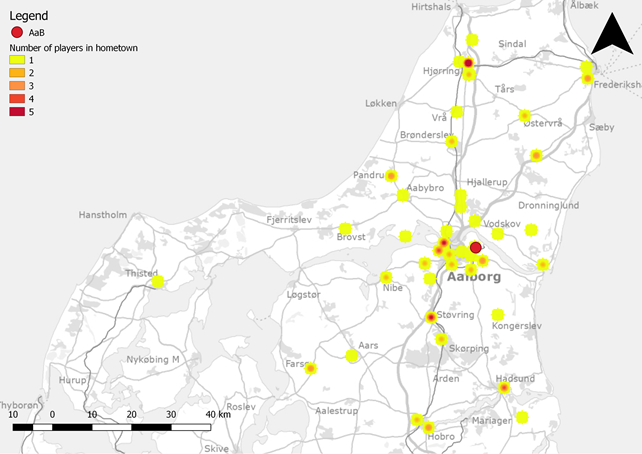
Figure 1: Show the hometowns (places of early development) of the elite youth players in AaB.
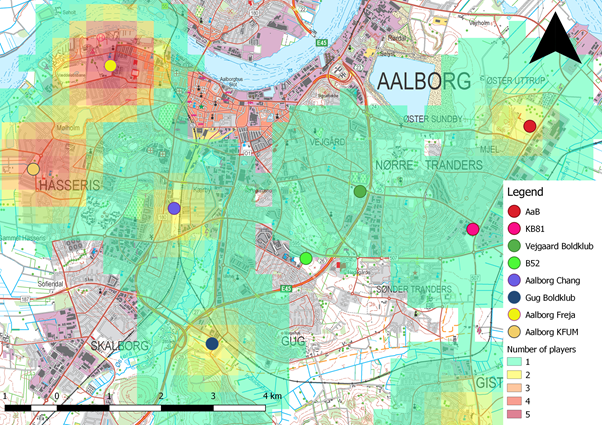
Figure 2: Proportion of elite youth players growing up in different neighborhoods in Aalborg
Table 1: Lists the household income, childhood clubs and their members, and the calculated success rate in the selected neighborhoods.
| Neighbourhoods in Aalborg | Yearly gross income pr. household | Childhood clubs | Members 0-12 years | Elite youth players in AaB | Success rate |
| Vejgaard | 266.000 | Vejgaard Boldklub
B52 |
442 | 1 | 0,4 % |
| Aalborg East
|
260.000 | AaB
KB81 |
432 | 3 | 1,3 % |
| Kærby-Gug | 350.000 | Aalborg Chang
Gug Boldklub |
610 | 4 | 1,9 % |
| Hasseris | 478.000 | Aalborg KFUM
Aalborg Freja |
859 | 9 | 2,3 % |
References
- Haugaasen M, Jordet G. International Review of Sport and Exercise Psychology Developing football expertise: a football-specific research review. Int Rev Sport Exerc Psychol. 2012;5(2):177-201. doi:10.1080/1750984X.2012.677951.
- Güllich A. Selection , de-selection and progression in German football talent promotion. Eur J Sport Sci. 2014;14(6):530-537. doi:10.1080/17461391.2013.858371.
- Musch J, Grondin S. Unequal competition as an impediment to personal development: A review of the relative age effect in sport. Dev Rev. 2001;21(2):147-167.
- Horton S. Environmental influences on early development in sports experts. In: Baker, J., Cobley, S., Schorer J, Schorer C& J, eds. Talent Identification and Development in Sport. International Perspectives. London: Routledge; 2012:39-51.
- Rossing N, Stentoft D, Flattum A, Côté J, Karbing DS. Influence of population size, density, and proximity to talent clubs on the likelihood of becoming elite youth athlete. Scand J Med Sci Sport. 2017;0(0):1–10. doi:10.1111/sms.13009.
- Rossing NN, Nielsen AB, Elbe A-M, Karbing DS. The role of community in the development of elite handball and football players in Denmark. Eur J Sport Sci. 2016;16(2):237-245. doi:10.1080/17461391.2015.1009492.
- Birchwood D, Roberts K, Pollock G. Explaining differences in sport participation rates among young adults: Evidence from the South Caucasus. Eur Phys Educ Rev. 2008;14(3):283-298. doi:10.1177/1356336X08095667.
- Engström L-M. Who is physically active? Cultural capital and sports participation from adolescence to middle age—a 38-year follow-up study. Phys Educ Sport Pedagog. 2008;13(4):319-343. doi:10.1080/17408980802400510.
- Nielsen G, Grønfeldt V, Toftegaard-Støckel J, Andersen LB. Predisposed to participate? The influence of family socio-economic background on children’s sports participation and daily amount of physical activity. Sport Soc. 2012;15(1):1-27. doi:10.1080/03031853.2011.625271.
- Ferry M, Lund S. Pupils in upper secondary school sports: choices based on what? Sport, Education and Society. 2016:1-13.
- Skrubbeltrang LS, Karen D, Nielsen JC, Olesen JS. Reproduction and opportunity: A study of dual career, aspirations and elite sports in Danish SportsClasses. doi:10.1177/1012690218789037.
- Bronfenbrenner U, Morris PA. The Bioecological Model of Human Development. Wiley Online Library; 2006.
- Dehn A. Stor undersøgelse: AaB bruger tredjeflest spillere af egen avl i Europa. bold.dk. https://www.tipsbladet.dk/nyhed/superliga/stor-undersoegelse-aab-bruger-tredjeflest-spillere-af-egen-avl-i-europa. Published 2017. Accessed April 22, 2019.
- AalborgKommune. Income. Retrieved from AalborgKommune.Dk: Http://Apps.Aalborgkommune.Dk/Statistik/Webaarbog/Aarbog05/Struktur/Indkomst.Html#Familiern Es IndkomstFamilieindkomstefteromr2.; 2003.
- Brewer CA. Basic mapping principles for visualizing cancer data using geographic information systems (GIS). Am J Prev Med. 2006;30(2 SUPPL.):25-36. doi:10.1016/j.amepre.2005.09.007.
- Rossing NN. Local Heroes – The Influence of Place of Early Development in Danish Handball and Football Talent Development. Aalborg: Aalborg University Press; 2018.
- Gruber H, Stoeger H, Ziegler A, Vialle W. Talent Development & Excellence. 2014;(April).
]]>